
A quick post to delve into the image pool from my ongoing trip to south east Spain with a possible thread/theme for next months exposition in Barbezieux.
Firstly for my colour work I have focussed a lot on the light and composition rather than purely the subject. Very early on, it was apparent the landscape that the birdlife here capitalises on presented wonderful opportunities to use the warm light of the rising and setting sun; both of which occurred over mountain ranges onto the rice field marshes an hour or so from actual sunrise and sunset
Second, I decided before the trip, having moved to a full frame Nikon Z8 and been pleased with the quality of prints I could achieve, to return to my roots of monochrome bird photography. This proved to be a real challenge in a southern Spain winter with its harsh, strong winter light. But blessed with the brief golden periods that I quickly discovered at the start and end of the day I did some sessions on close-crop portraiture using my Z600mm and F-mount 500f4 lenses. This is something Ive not practiced for 40 years, pre-digital and at a time when I didnt have the benefit of such exotic glass. It gave me a lot of fun with the Heron, Egret and Ibis species abundant here.
For Part 1 of this 2 part blog, here is the story in colour.-
LIGHT & DAY – Egret and Ibis
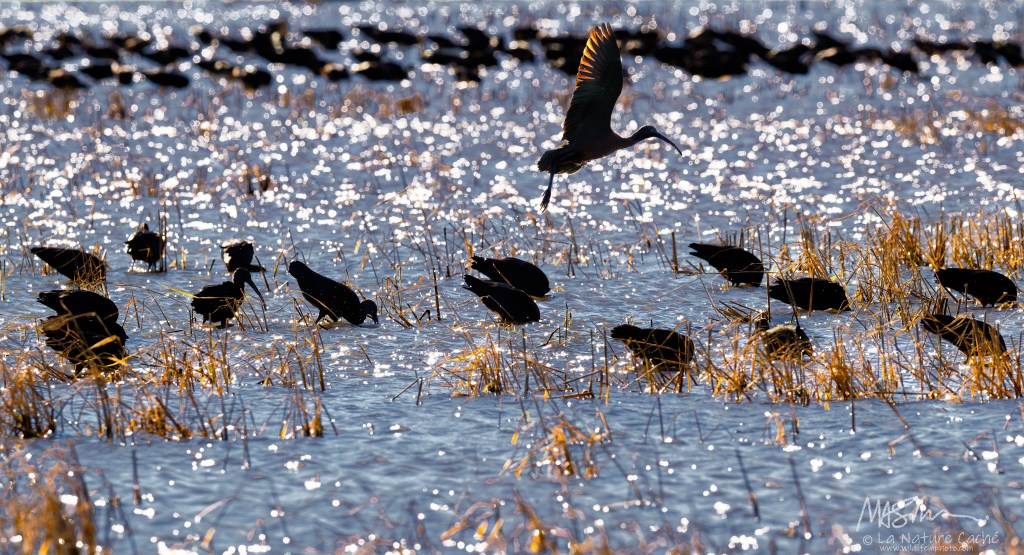

The Glossy Ibis were numerous on the still-flooded rice fields when I arrived in January. Feeding amongst the stubble in long linear flocks, there was a constant relay of individuals and groups taking flight to move to the head of the flock, like a vast rolling peloton.

Mid-day sunshine provides great opportunity to capture these elegant flyers in silhouette.


These marshes are managed for rice, and during my stay they were being returned to condition for replanting by modified tractors and harrows. Typically in blocks of several tens of hectare, once harrowed the water level on each field was lowered through a sluice and ditch system. Here two Glossy Ibis are probing for anything they can find. Aquatic molluscs were numerous in these conditions.
Even in good light these birds appear black to the naked eye and judicious exposure and use of Nikons amazing bells and whistles in-camera is essential to have any hope of revealing their beautiful iridescence when developing the RAW files.
A Nuance of Monochrome
predominantly black or white birds often provide good subjects, in portrait or with their environment, for monochrome. In this case, captured on camera in colour, processing it for monochrome gave a much more impactful picture of this Glossy Ibis consuming a small mollusc: look for the oval shell about to enter the gullet.

Their technique is to probe continuously in the mud below the water, feeling for the small molluscs. Once pinched into the very end of their beaks, they flick it backwards and move their heads forward to be directed by the tongue then ingested.
My monochrome outing will be fully covered in Part 2.
END OF DAY FLIGHT
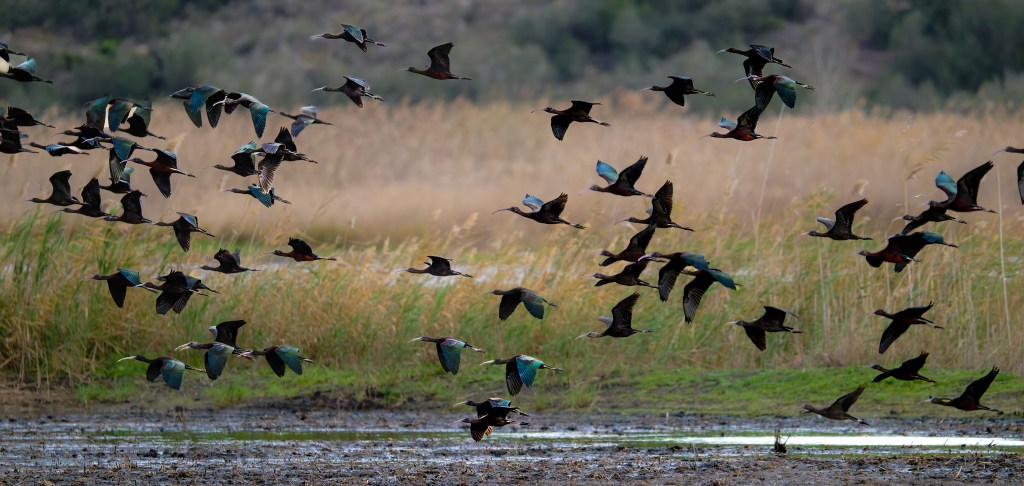
Taking flight as the last light of dusk recedes behind the mountain. The ibis in several flocks each measured in the hundreds left the rapidly draining fields to roost, i think, in the un-managed reed beds at the north of the reserve, safe from predators.
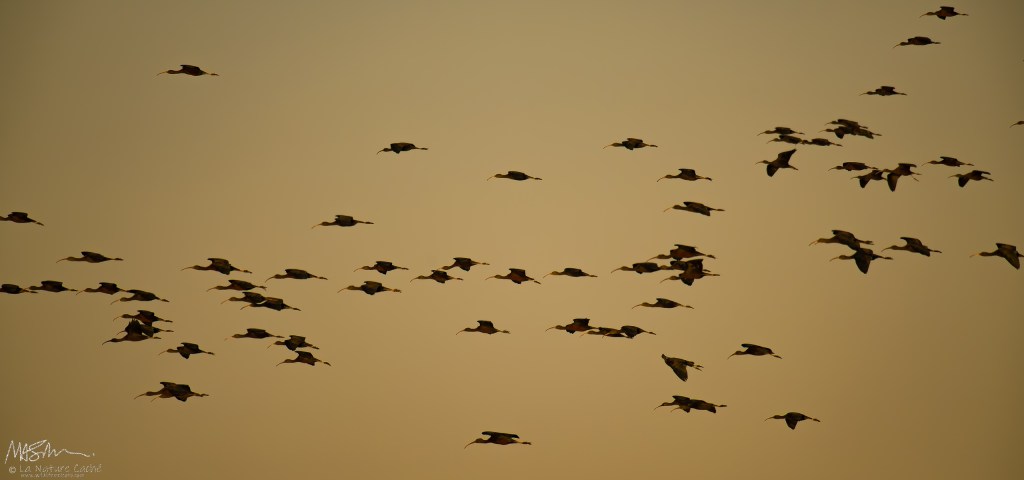
BRIEF BUT GOLDEN: SUNRISE AND SUNSET
I mentioned the brevity of the early and late light. As I was to find, a brief 15 minutes yielded the most deep warmth as the sun rose over the crest of Mont Pego and even less, 10 minutes at the most, as it set over the western mountains where we were staying for the winter.
After failing on my first visit to find an auto white balance setting that really replicated the colour on the waterlogged fields, on my second and third visit I reverted to setting a colour temperature using test shots.
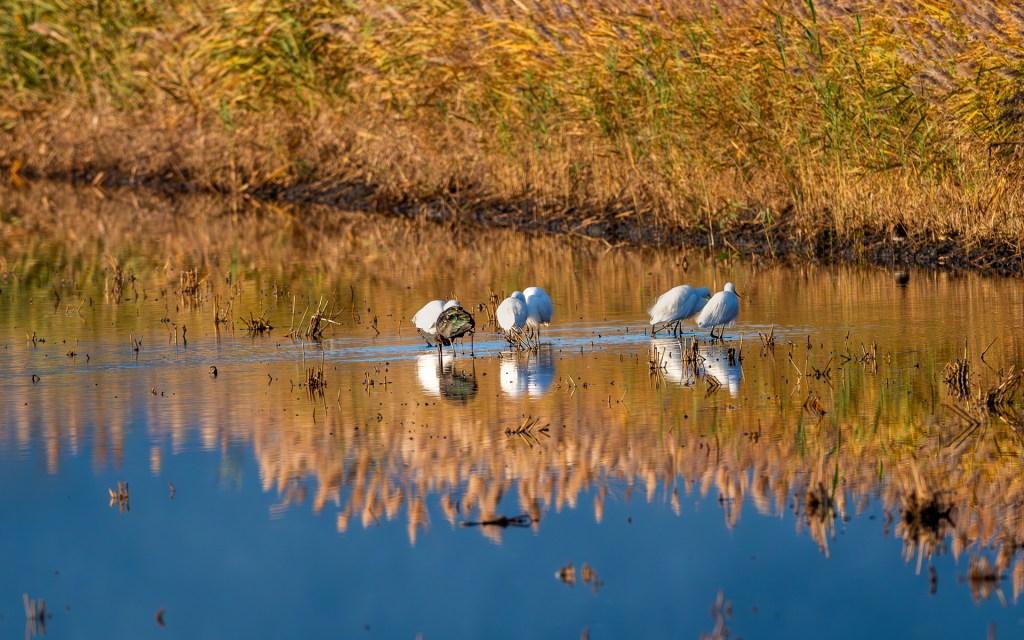

Little Egret and a lone Ibis in early morning and, looking east onto an as yet untouched stubble field, the first moments of the setting sun as the Glossy Ibis feed.
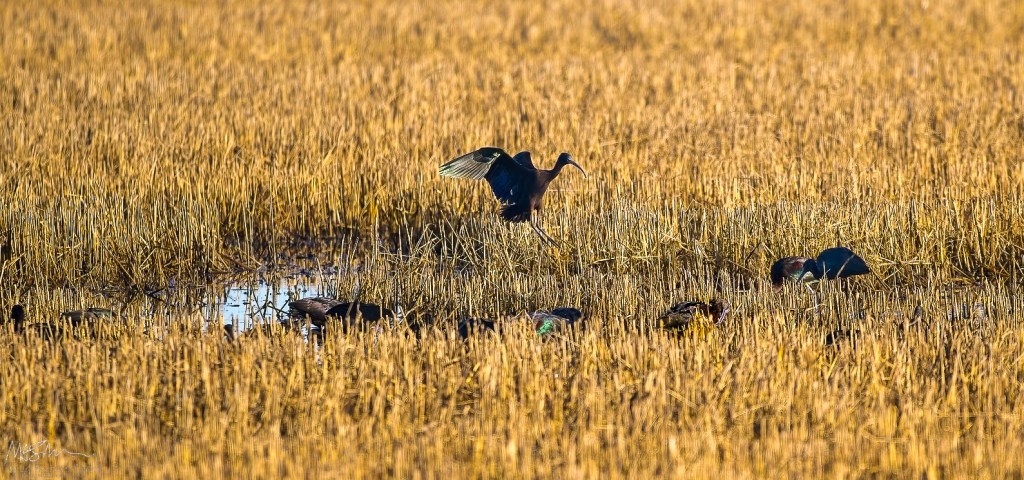
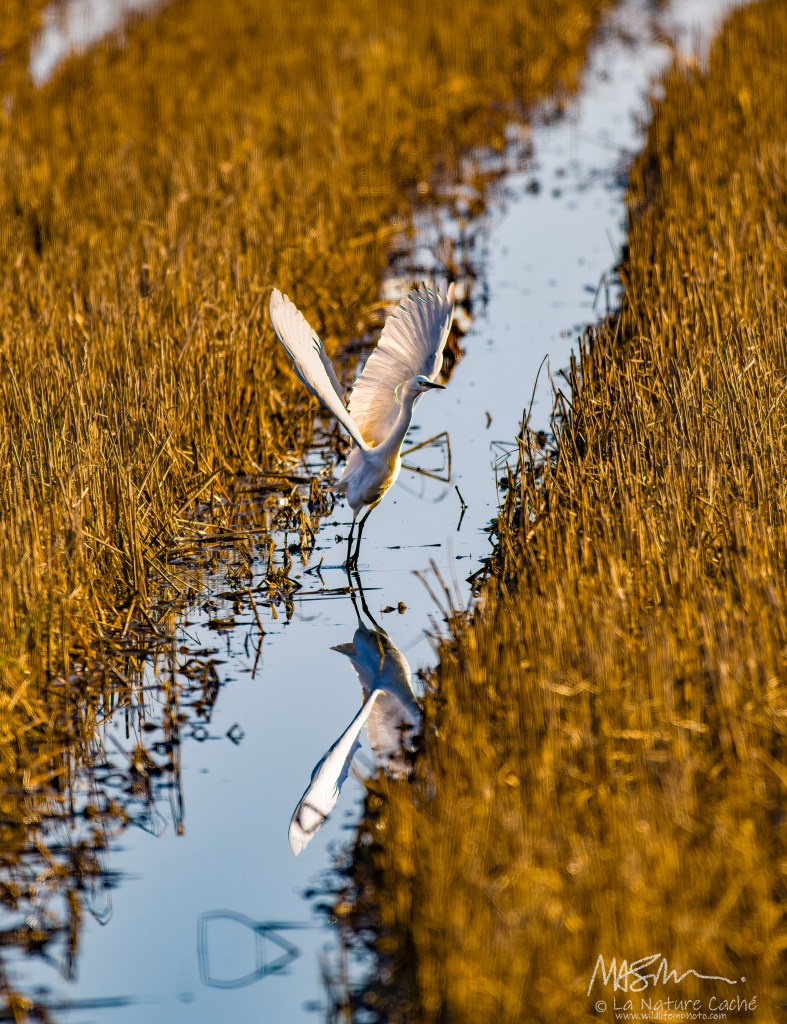
Little Egret departing for the night
About half of the entire reserve is managed as rice crops, meaning there is a cycle of shallow marsh and mudflats throughout the year. The remainder is a vast and largely impenetrable forest of reedbeds, several metres tall in places. February saw the last of the stubble fields being returned to muddy flats using these modified tractors, this one worked well beyond sunset.

Little Egret and Glossy Ibis closely following the harrow in a rolling flock. Large crayfish seemed to be the prize catch, with the need to escape quickly out of the flock to avoid being robbed of the prize.
Herons seemed to be the next in line, preferring to wait at the edge of the un-turned stubble away from the mele, followed by Sandpipers at the back of the line
The paddy fields are all bordered by wide, deep canals linking back to the two rivers that flow through
the reserve. Simply turning through 180 degrees revealed the cormorants on the ditches, shunning the feast behind the tractor, ill-equipped, I guess, to compete once the water had been drained to such a low level for harrowing.
In Part 2 I will post the monochrome portfolio, which will form the basis for the exhibition in March in Barbezieux.
 WILDLIFE IN PHOTO